Repiping & Whole-Home Pipe Replacement in Torrance, CA
Full repiping for Torrance homes still running on original galvanized or aging copper supply lines, replacing recurring leak repairs with one permanent fix.
Signs your home needs a full repipe
Repeated pinhole leaks
More than one or two pinhole leaks in copper supply lines within a couple of years usually means the pipe itself is failing, not just an isolated spot.
Low water pressure throughout the house
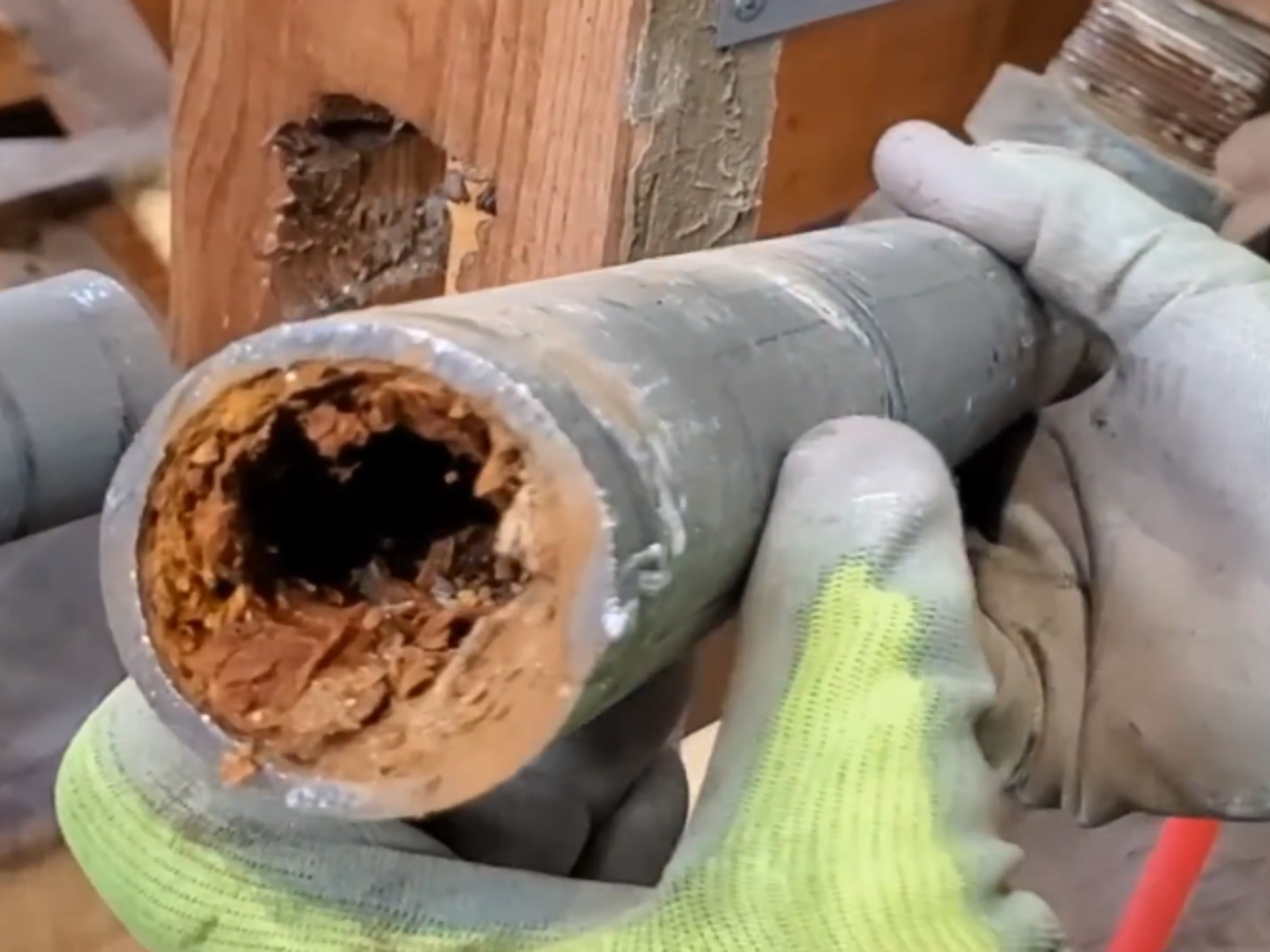
Corrosion narrowing pipe diameter from the inside is a common cause of pressure loss that affects every fixture, not just one.
Discolored water from multiple taps
Rust-colored or cloudy water from several fixtures, not just the water heater, often points to failing galvanized supply lines.
Original galvanized pipe still in place
Homes built before the 1960s, including many in Old Torrance, may still have original galvanized steel supply lines well past their expected service life.
Tired of repeated pipe leaks?
A full repipe stops the cycle instead of chasing the next leak.
Why repiping comes up more often in Torrance
Homes in Old Torrance and parts of Walteria that date to the city's earlier growth periods were often built with galvanized steel supply lines, a standard material at the time but one that corrodes from the inside over decades, gradually narrowing the pipe and eventually failing outright. Later copper installations hold up better but are still subject to pinhole leaks over a long enough service life, and to faster corrosion where marine-layer humidity reaches exposed sections near the coast.
Because these failures tend to happen gradually and in more than one spot, a homeowner who's called for the same kind of leak repair two or three times in a few years is often better served financially by a full repipe than by continuing to chase individual failures one at a time as they appear.
Gramercy and Andreo avenues in Old Torrance were Torrance's first residential streets in 1912, and Walteria's older bungalows are close behind in age. Repiping a house of that vintage is planned around the walls that must open, and because many Craftsman homes have plaster worth protecting, we map access points before any cutting begins.
How we evaluate whether a repipe makes sense
Pipe material and age assessment
We identify what material your home's supply lines are actually made of and how it compares to its typical service life.
Leak history review
A pattern of repeat leaks in different locations is a stronger signal for repiping than a single isolated failure.
Pressure and flow testing
Testing pressure and flow at multiple fixtures helps confirm whether corrosion has already narrowed the pipe's effective diameter.
Honest repair-vs-repipe recommendation
We'll tell you directly if a targeted repair is still the more sensible option rather than defaulting to the larger job.
PEX vs. copper for a repipe
PEX
- Lower material and labor cost
- Flexible, fewer joints needed
- Resistant to the corrosion that affects metal pipe
- Faster installation, less wall opening
Copper
- Longer track record in older homes
- Higher heat tolerance
- Higher upfront material cost
- More joints, more potential leak points over time
"I keep calling for the same kind of leak"
Many Torrance homeowners reach the repiping conversation after several separate leak repairs, not because anyone told them to consider it upfront. If that sounds familiar, it's worth an honest look at whether the pipe material itself, not any one repair, is the real underlying issue.
It's a strong signal. Multiple unrelated leaks usually means the pipe material is failing broadly, not that you've had unusually bad luck with individual fittings.
Not necessarily. While it's most common in homes with original galvanized lines, copper repiping is sometimes recommended in newer homes with unusually aggressive water chemistry or manufacturing defects in the original pipe.
How a repipe actually happens
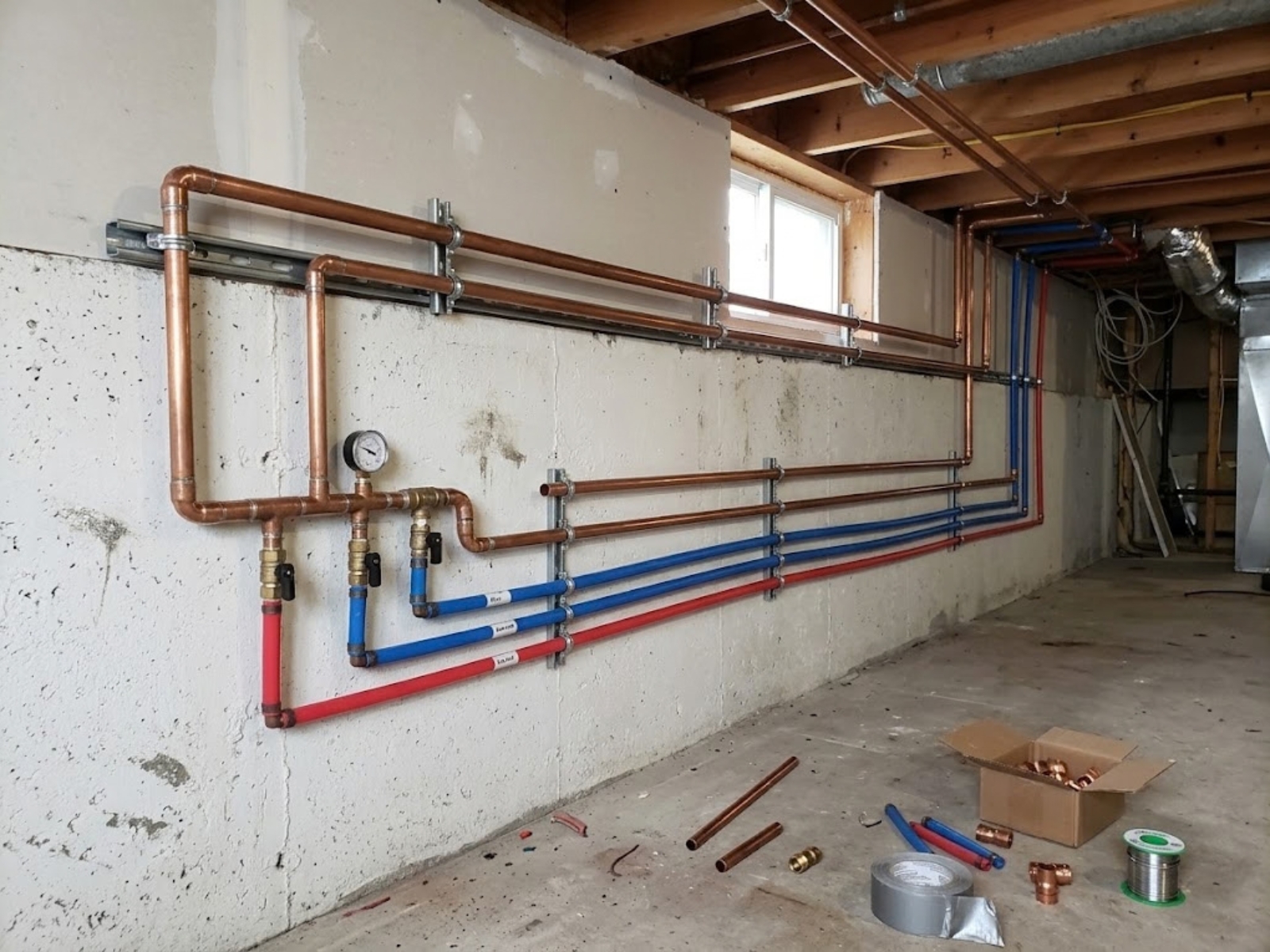
A whole-home repipe doesn't mean opening every wall in the house. Modern repiping techniques route new lines through attics, crawlspaces, and a limited number of access points, minimizing how much drywall needs to be cut and patched. We coordinate the drywall patching or hand it off cleanly to a patch-and-paint contractor, depending on what you prefer.
Most residential repipes are completed in a few days, with water shut off only for short windows during the actual line swaps rather than for the entire project.
Clear pricing before work starts
Repiping is priced based on the home's size, pipe material, and access, confirmed with a walkthrough before we start. Call for current rates.
Repipe, partial replacement, or a targeted repair
A repipe replaces the supply lines through the whole house. It makes sense when leaks keep returning, water looks rusty, or pressure has dropped because pipes have narrowed from corrosion. A partial replacement covers one run, like the hot water lines or an attic section.
Do not decide before the cause is confirmed. A single leak can be a one-time repair, and our leak detection shows whether the problem is local or widespread. If the leak is under the floor, slab leak repair may be all you need.
Galvanized, CPVC, and older copper
Galvanized steel rusts from inside. You may notice reduced flow and brown water well before a burst. CPVC can turn brittle with age and crack at fittings. Copper can develop pinholes in some water conditions, which is why a leak at one spot can be a warning about the rest.
Tell the dispatcher what material you think you have and where the pipes run, such as through the attic or under a slab. That helps us plan access. Replacement is quoted after an inspection, not guessed from the phone.
Questions about repiping in Torrance
Most residential repipes are completed within a few days, depending on the home's size and layout.
Water is only shut off during short windows while specific sections are connected, not for the entire project.
We coordinate drywall patching as part of the project, or can work alongside a patch-and-paint contractor you prefer.
Repeated leaks, discolored water, and falling pressure are all signs that the pipes are failing as a system. If you only have one leak and the rest of the pipe is sound, a repair is usually enough.
Galvanized pipes are gray steel with threaded joints, and they rust from inside. Reduced pressure and brown water are common signs. A technician can confirm the material quickly.
Often, yes. A partial replacement is possible when the cold lines are in better shape. We inspect both and tell you which makes more sense.
Not always. CPVC can become brittle with age, so if it is cracking at fittings, replacement may be wise. A technician checks its condition first.
Often called together
Serving Torrance and the South Bay
One permanent fix, not another patch
Whole-home repiping across Torrance and the South Bay.
☎ (310) 424-7510