Emergency Slab Leak Detection & Repair in Torrance, CA
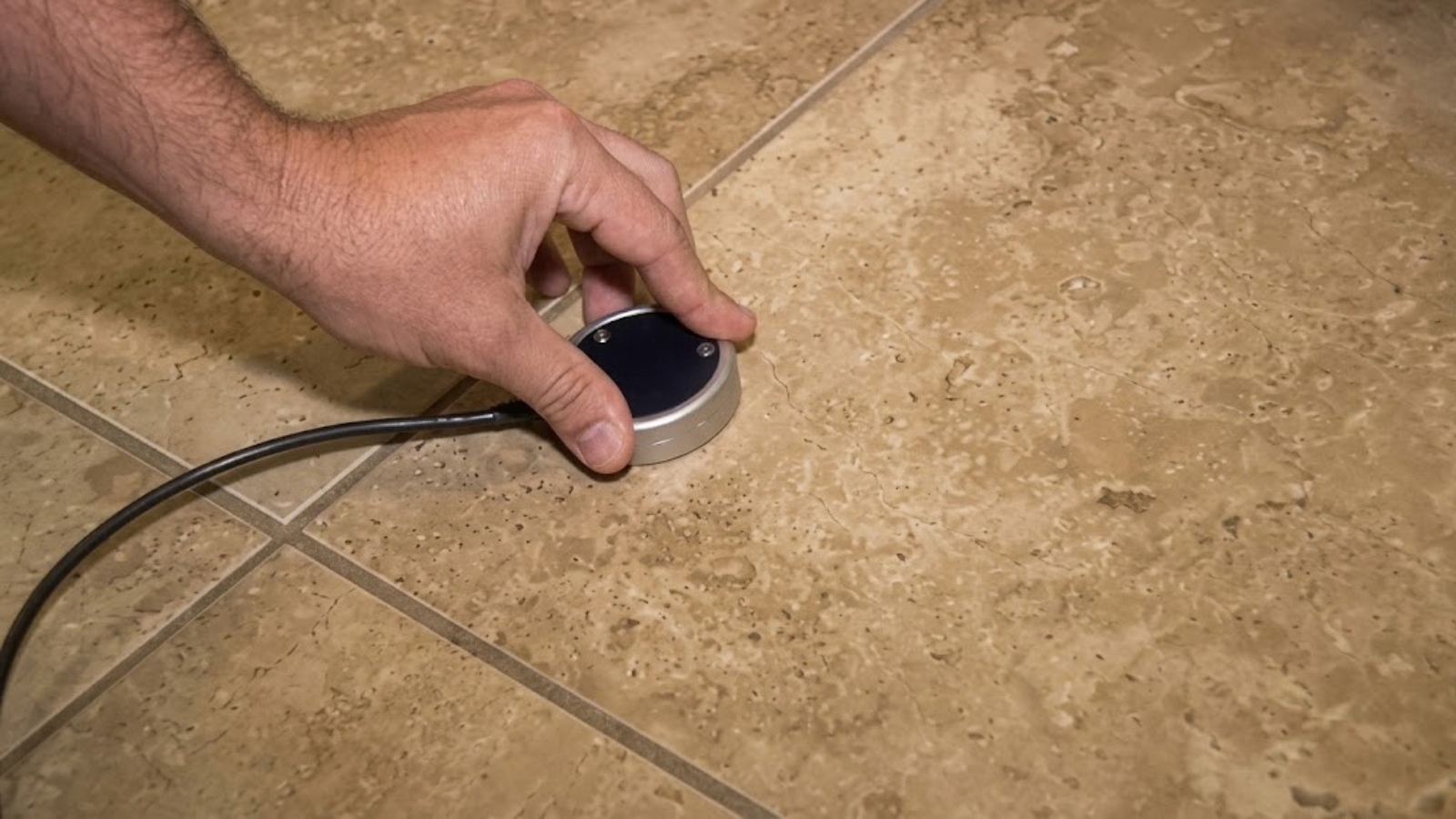
Electronic leak tracing pinpoints a slab leak's exact location before any concrete is opened, for both slab-on-grade and raised-foundation homes across Torrance.
Signs you may have a slab leak
Warm spot on the floor
A patch of flooring that's noticeably warmer than the rest of the room, especially near the water heater, often means a hot-water line is leaking under the slab.
Water coming up under floorboards
Moisture or standing water appearing at the base of flooring, particularly in older homes, is a common way a slab leak first becomes visible.
Unexplained water bill increase
A slab leak can run for weeks before it's visible, and a climbing water bill is often the first real clue something is wrong underneath the floor.
Cracks in flooring or walls
Sustained water under a slab can shift the foundation slightly, showing up as new cracks in tile, drywall, or the slab itself.
A slab leak that is actively running is an emergency. Warm spots on the floor, the sound of water with every fixture off, or water appearing at the baseboards all call for fast action. Shut off the main valve if you can and call our 24/7 emergency line, and a technician can start tracing the leak the same day.
Active slab leak right now?
Our emergency line is open 24/7 for hot spots, sounds of running water, and flooding.
Not every Torrance home has the same foundation
West Torrance's post-war tract homes, built through the 1950s and 60s, were constructed on a mix of foundation types: some tracts sit on slab-on-grade, while others use a raised pier-and-beam foundation with a crawlspace underneath. That distinction matters directly for a leak repair, because a pier-and-beam home often allows us to access and repair a leaking line from the crawlspace without cutting into a floor at all.
Older Old Torrance bungalows are more likely to have a raised foundation as well, while true slab-on-grade construction, where the plumbing runs directly under a poured concrete floor, is more common in some of the later West Torrance tracts. We confirm which type your home has before proposing a repair method, rather than assuming based on the home's age alone.
West Torrance and Southwood, west of Hawthorne Boulevard, are mid-century tract neighborhoods built on a mix of concrete slabs and raised foundations. In the slab homes, supply lines run beneath the floor, so a bill that climbs with no visible cause is worth a slab leak check.
How we confirm a slab leak before repair
Pressure and meter test
We confirm water loss is actually occurring in the system before assuming the cause is a slab leak specifically.
Electronic and acoustic tracing
We track the specific frequency pressurized water makes escaping under concrete, narrowing the search area to a few feet before anything is opened.
Thermal imaging
For hot-water line leaks, thermal imaging can help confirm the warm spot's exact boundaries before any cutting begins.
Access point confirmation
For pier-and-beam homes, we check whether crawlspace access can reach the leak before considering a slab penetration at all.
"There's a warm spot on my floor and I don't know why"
Most slab leak calls in Torrance start with a symptom, not a diagnosis: a warm patch on the floor, water showing up under the baseboards, or a driveway that stays damp longer than it should after watering the yard. You don't need to already know it's a slab leak, that's exactly what detection is for.
A warm patch, especially near where a water heater or hot-water line runs, is one of the most common ways a slab leak shows up. It's worth having checked before the leak grows.
It can be, especially in an older home. We'll confirm with electronic detection before recommending any repair, so you're not guessing at the cause.
Yes, a leak under a concrete driveway or slab edge is a real possibility, particularly if the dampness appears without a clear source like sprinklers.
How a slab leak actually gets fixed
Once the leak is located, the repair method depends on the home's foundation and the leak's exact location. In a pier-and-beam home, we can often reroute or repair the line from the crawlspace, avoiding the slab entirely. In a true slab-on-grade home, repair may mean a targeted concrete cut directly over the leak, or in some cases rerouting the line overhead through the attic instead of cutting the floor at all.
We'll walk through the realistic options for your specific home and leak location, including the trade-offs of a spot repair versus a full reroute, before any work begins.
Clear pricing before work starts
Slab leak repair is priced based on the confirmed location and the repair method chosen. Call for current rates.
Clues that the leak is under the floor
A warm spot on the floor
A hot water line running through the slab can heat the flooring above it. Bare feet notice it first.
Running water sound with everything off
A faint hiss or rush when the house is quiet means water is moving somewhere it should not.
Moisture rising at baseboards or through concrete
Water that seeps up through the floor or collects along walls often comes from below.
A meter that keeps moving
If the dial turns after you shut the house main, the leak may be underground between the meter and the shutoff.
Slab, driveway, garage, and raised-foundation homes
How we reach a leak depends on the house. On a slab, the leak is traced first, then the concrete is opened at one spot. A garage floor or driveway slab can be handled the same way, and we explain concrete work before it starts.
Homes with a crawlspace are easier, since pipes under the floor are reachable from below. If a leak keeps returning because the pipes are worn out, rerouting lines overhead or a full repipe may cost less over time than repeated slab repairs. If you hear water under a raised floor, the issue may be a pier-and-beam leak, not a slab leak, and the tracing method is the same.
Questions about slab leak repair in Torrance
Not always. If your home has a raised, pier-and-beam foundation, we may be able to access and repair the line from the crawlspace instead.
We use electronic and acoustic leak-tracing equipment, sometimes paired with thermal imaging, to pinpoint the leak's location before any concrete is opened.
It can. Sustained water under a slab can lead to soil movement and cracking over time, which is why we recommend addressing a confirmed leak promptly.
We do both. After the leak is pinpointed, the technician explains the repair options and the price, and the work starts only when you approve the plan.
A single leak in otherwise healthy pipe is usually a spot repair. If the pipes are old and leaks keep appearing, a reroute or repipe can be the better value. We compare both with you.
Yes, in most cases. The leak is traced first so the concrete is opened at one spot instead of several, and the plan is explained before any cutting.
Close the main shutoff at the house. If water still seems to move, call our emergency line and say so. That detail helps us plan the search.
It might be a leak in a crawlspace home or a slab. The sound alone does not tell us which, and tracing finds where the water is actually escaping.
Often called together
Serving Torrance and the South Bay
Stop guessing where the leak is
Slab leak detection and repair across Torrance and the South Bay.
☎ (310) 424-7510